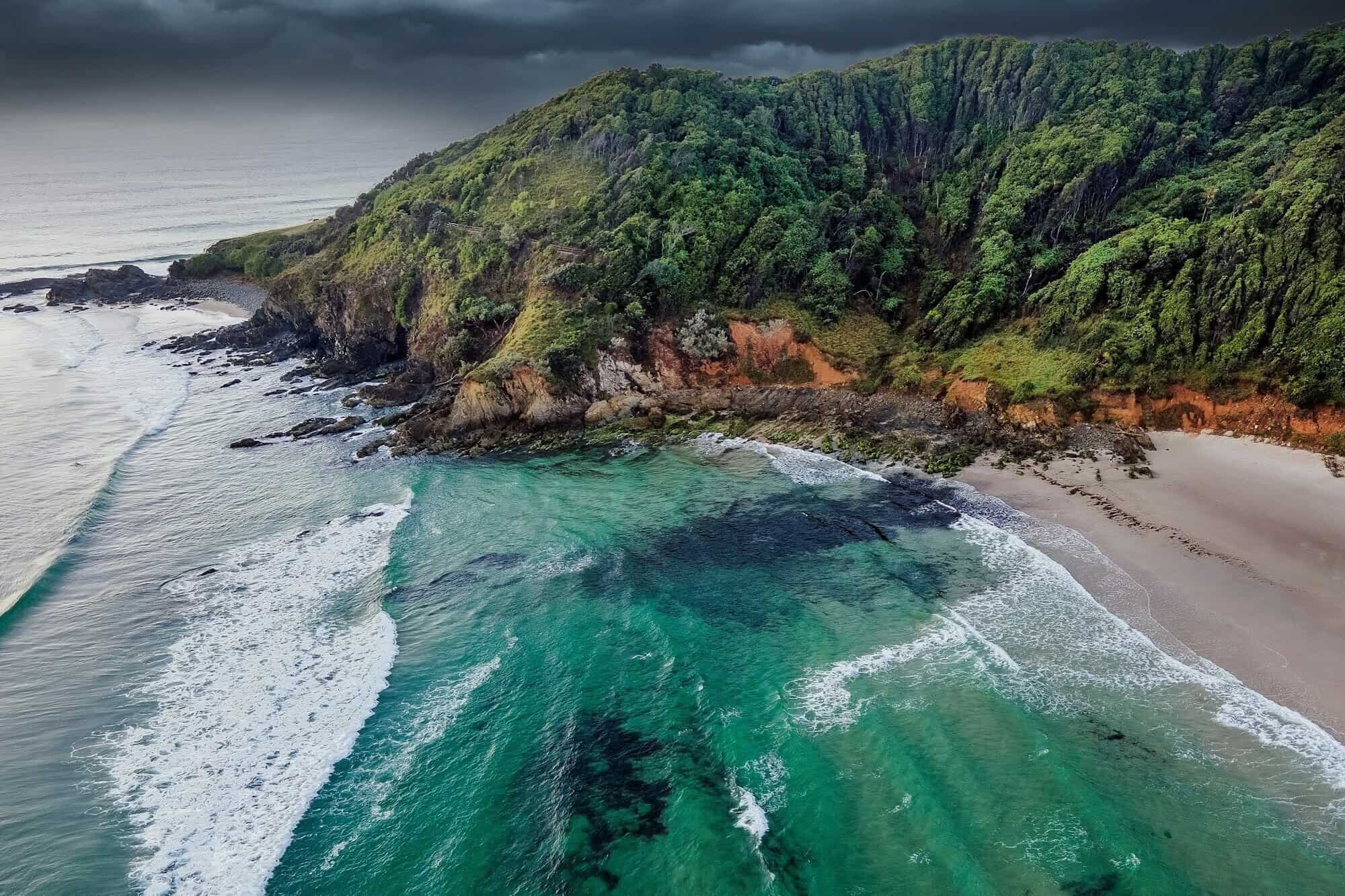
Yes. Byron Bay has waves for every level, from the long, gentle right-hander at The Pass to the open beach breaks of Tallow Beach. The town also pairs its surf with superb food, design and wellness. Autumn and winter usually bring the most consistent waves.
Why Byron Bay surfing is about more than waves
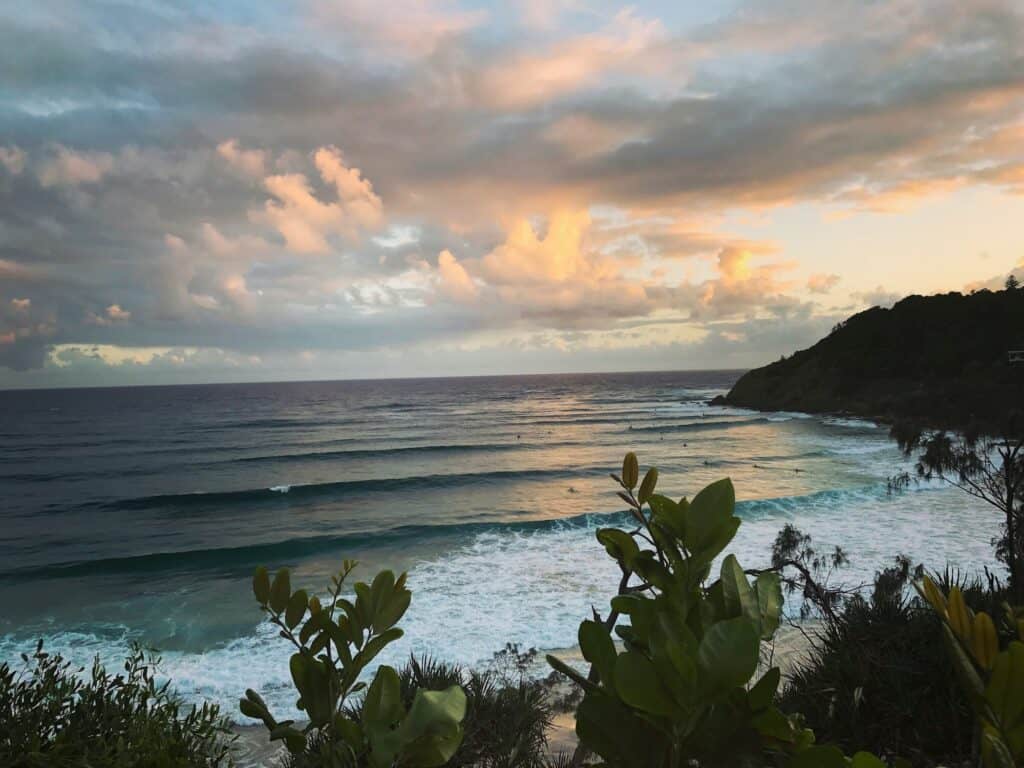
Byron Bay surfing begins with a view. From the water at The Pass, you look up at a lighthouse on a green headland. A crescent of sand curves away to the north. Behind the town, blue ranges fade into the hinterland. Few surf towns anywhere offer such a beautiful frame for a morning session.
Yet Byron is just as famous for what happens after the surf. The town has become a center of Australian food, design and wellness. Long lunches in the hills, boutique hotels and quiet spa retreats fill the hours between tides. For travelers who care about all of that, Byron Bay is the most rounded surf destination in Australia.
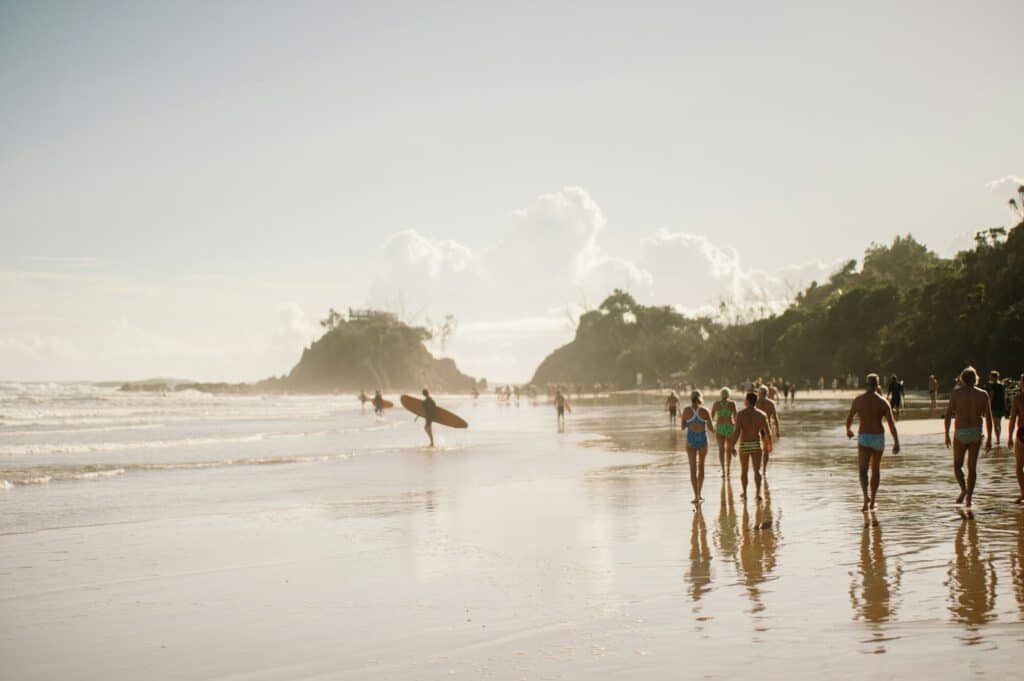
Byron also carries a central place in Australian surf culture. Surfers drove north to these points in the 1960s and many never left. They brought boards, music and a relaxed way of living that still shapes the town. Today, that heritage blends with a polished, international scene.
This guide explains the breaks and when they work, then turns to coaches, stays and tables. It also covers the hinterland, the marine park and the Traditional Custodians of this coast. By the end, you will know how to plan a week of surf and good living in Byron.
The Byron Bay breaks, from The Pass to Broken Head
Byron’s coast faces several directions, which is its great advantage. The bay curves north from the cape, so its beaches are sheltered from southerly winds. Meanwhile, the open beaches to the south catch every swell. On almost any day, at least one break is working well.
The Pass
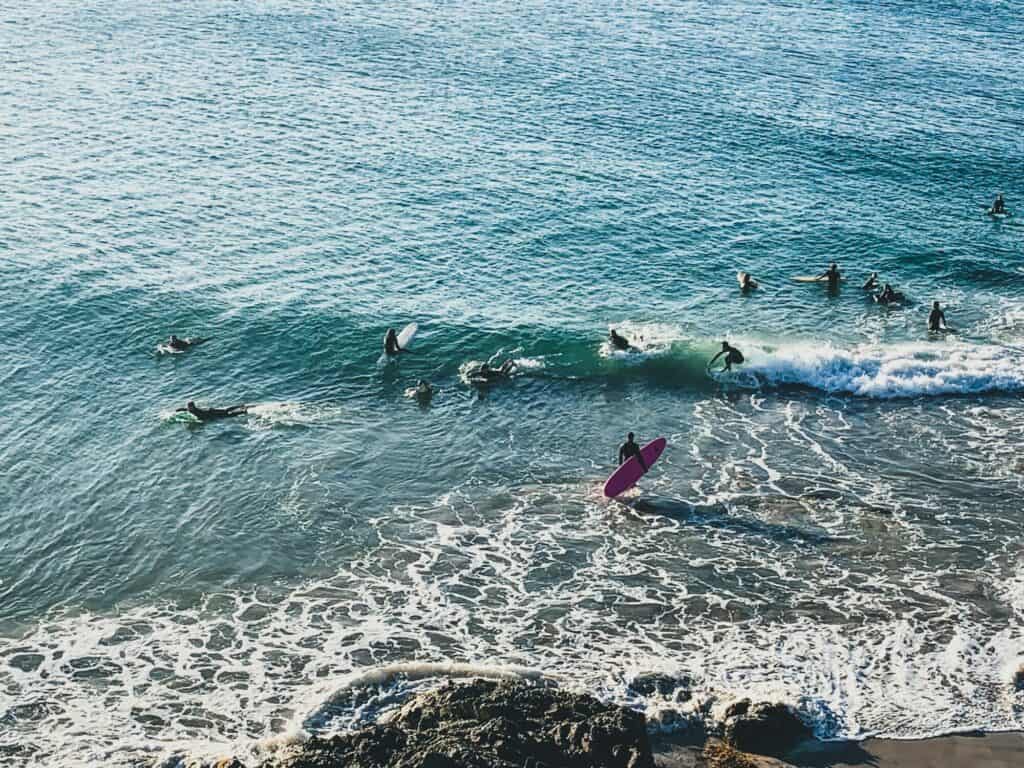
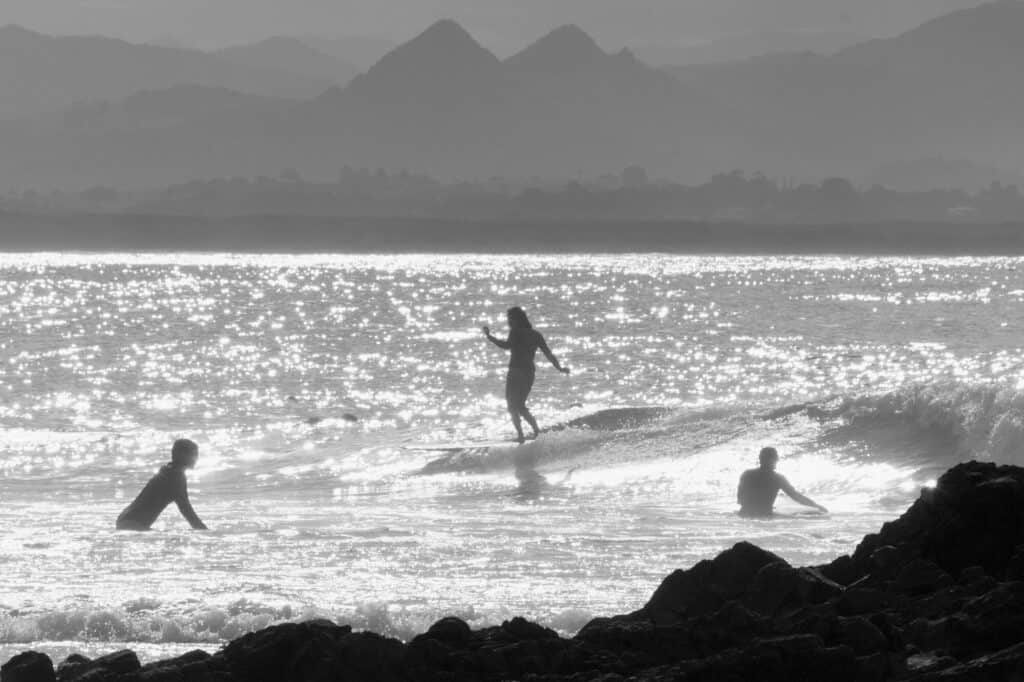
The Pass is the signature wave of Byron Bay surfing. It breaks off the rocks below Cape Byron and peels along the beach toward Clarkes. On a good swell, rides can last a very long time. The wave suits longboards and graceful surfing, though it also attracts a crowd.
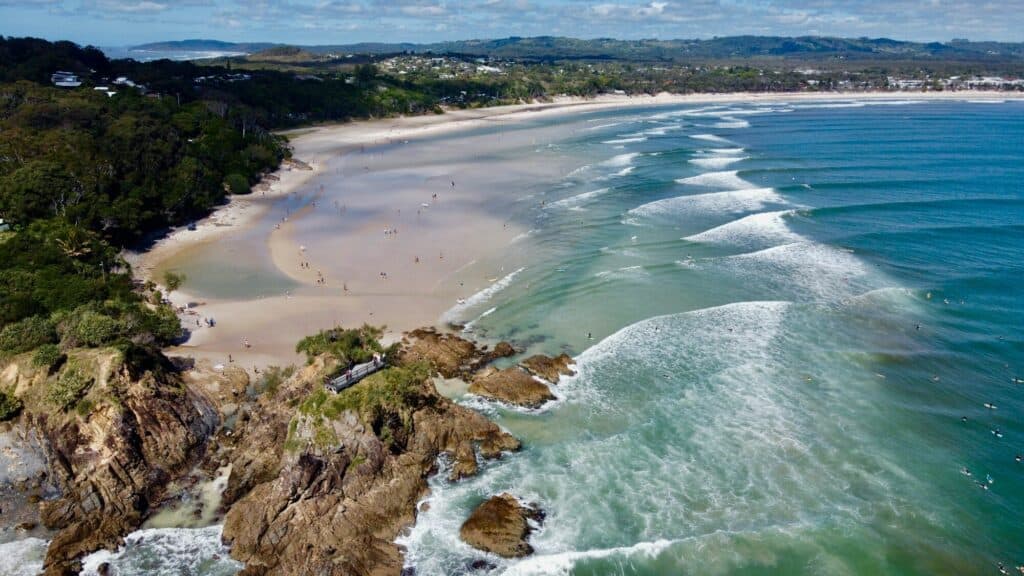
Because of its fame, The Pass demands good manners. The line-up is busy, especially in school holidays and on weekends. Beginners should surf the inside sections or Clarkes Beach instead. Experienced surfers can find quieter waves at dawn, before the town wakes up.
Wategos and Little Wategos
Wategos Beach sits tucked inside the cape, facing north. Its small, gentle waves are perfect for learning and for relaxed longboarding. The beach is also one of the prettiest in New South Wales, with pandanus palms and clear water. Little Wategos, a short walk east, lies at the base of the most easterly point.
Clarkes, Main Beach and Belongil
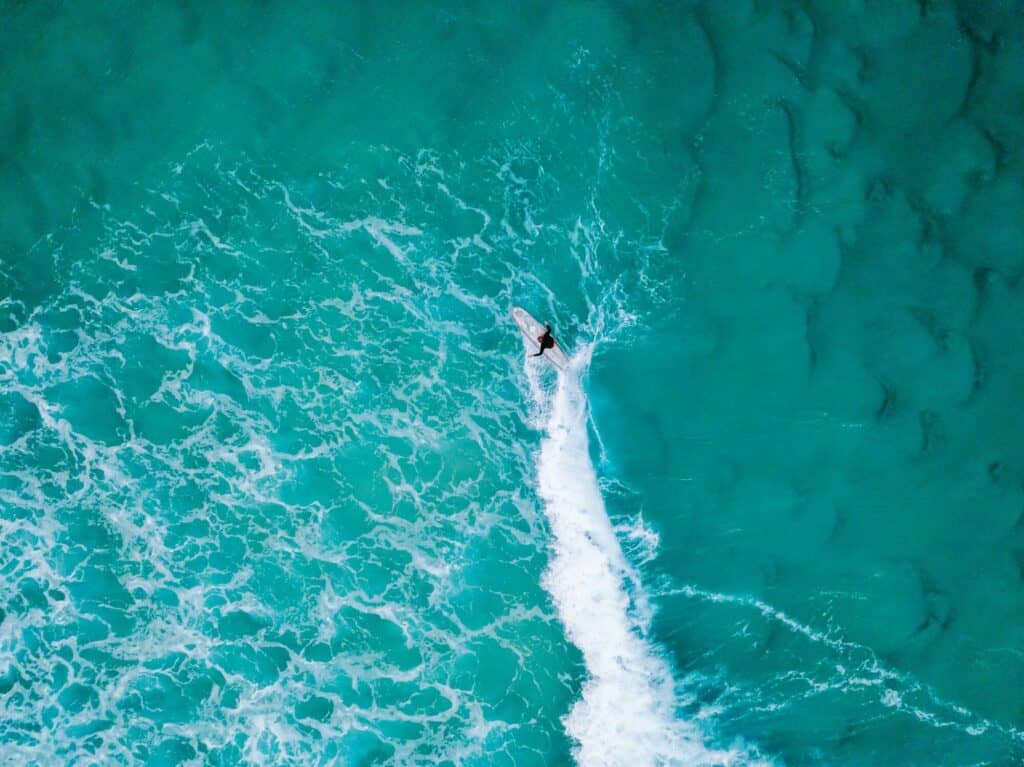
Clarkes Beach and Main Beach run west from The Pass toward the center of town. Their sandbanks change with every storm, so the best spot moves through the year. Belongil, further west, offers more space and fewer crowds. These beaches suit intermediate surfers looking to escape the busy point.
However, the banks here can change overnight after a big storm. For that reason, local surfers check every beach before choosing where to paddle out. A coach or surf guide will do the same for you. Meanwhile, the walk along the sand between them is a pleasure in itself.
Tallow Beach and Broken Head
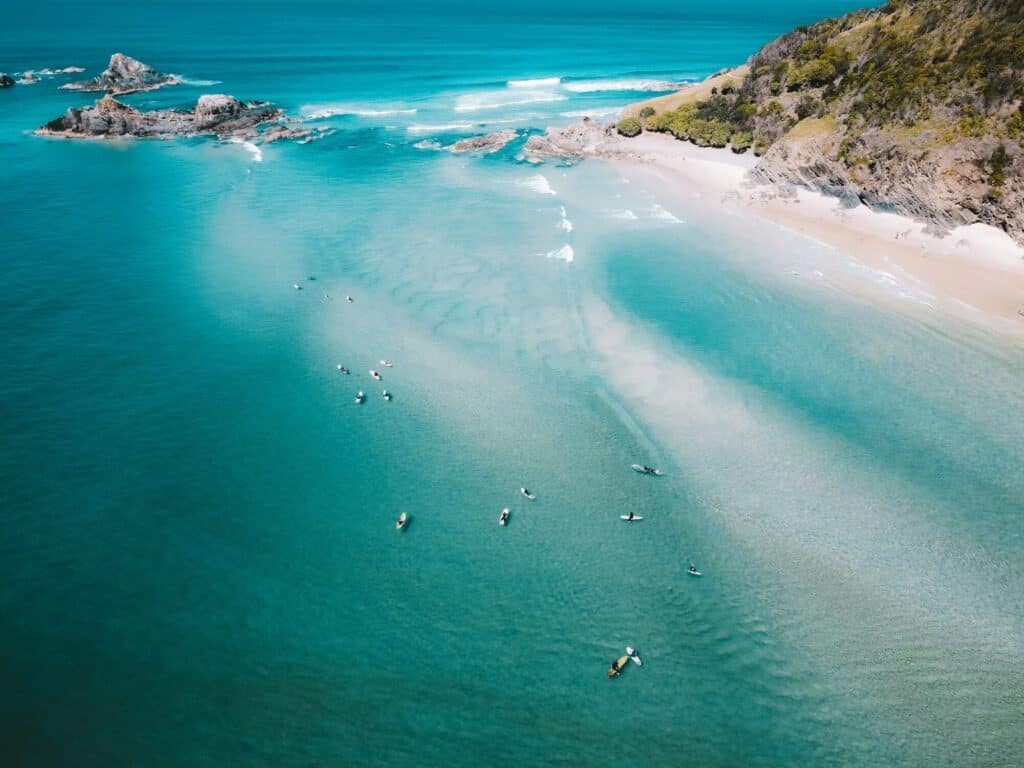
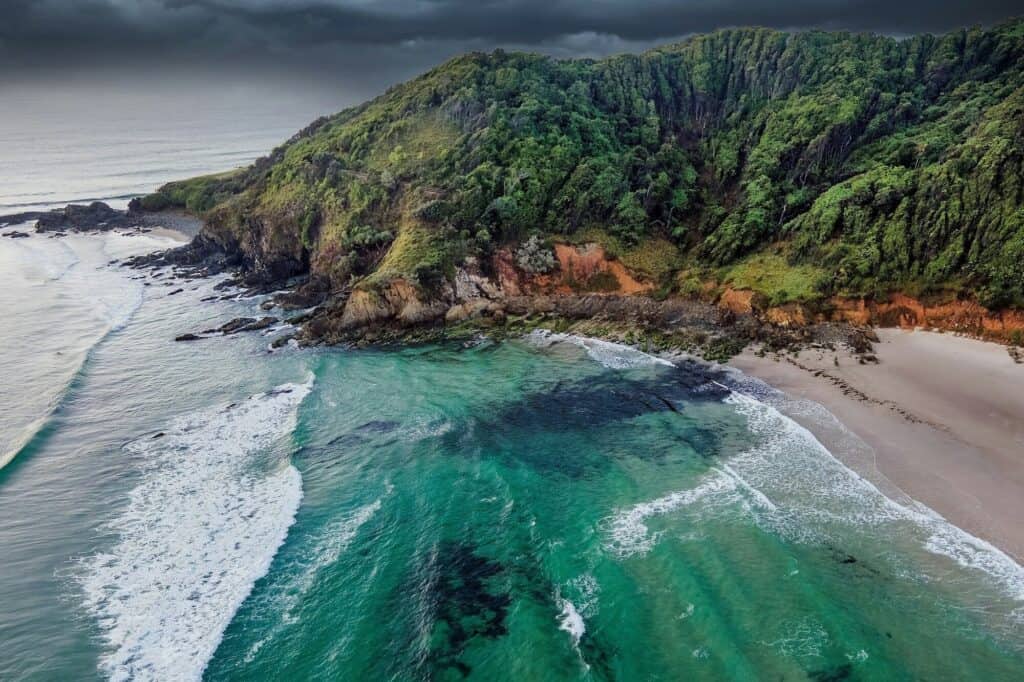
South of the cape, Tallow Beach runs for miles beside Arakwal National Park. It faces the open ocean, so it catches more swell than the bay. The banks shift constantly, and the beach is often almost empty. Further south, Broken Head offers a beautiful right-hand point inside a nature reserve.
Broken Head also has one of the region’s most beautiful campgrounds and rainforest walks. Consequently, many visitors combine a surf with a picnic and a swim in the clear water. Because it sits away from town, it rarely feels crowded. Bring everything you need, since facilities are limited.
STRAAYA may earn a commission when you buy through these links, at no extra cost to you.
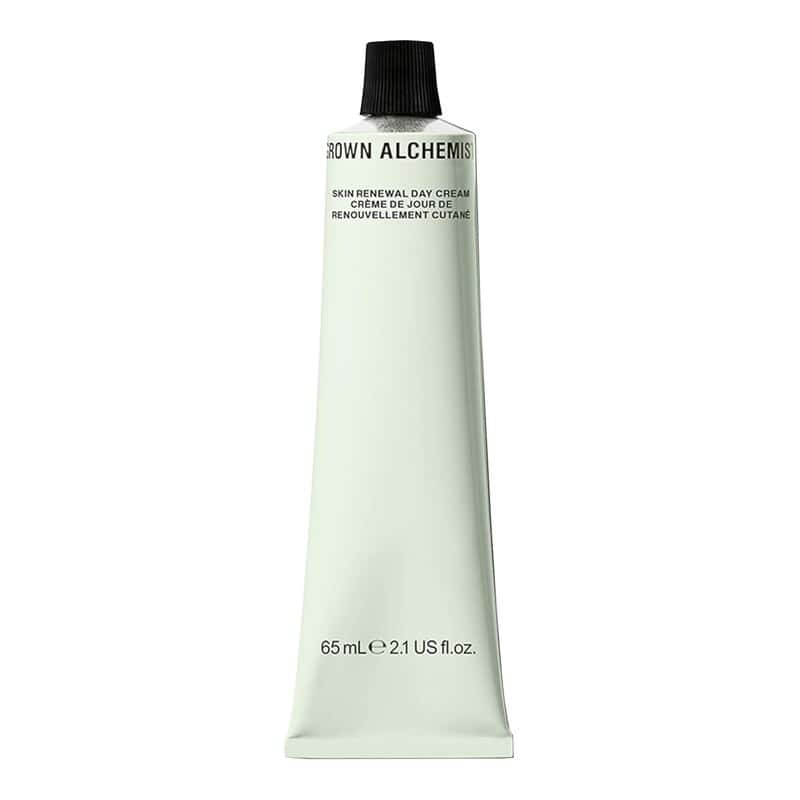
A botanical moisturizer from the Melbourne skin care house.
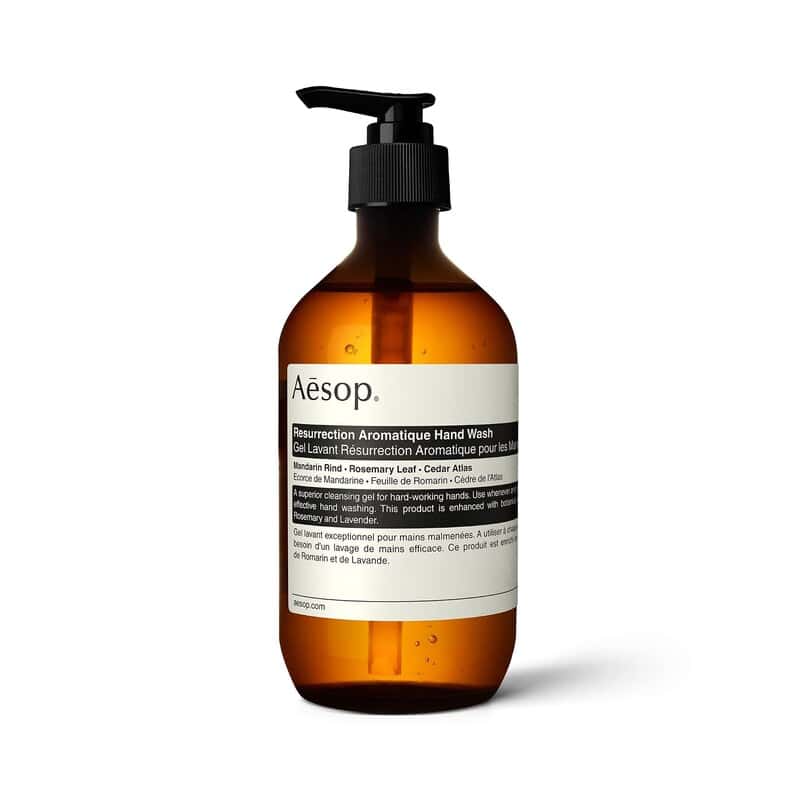
Mandarin, rosemary and cedar for sandy hands after the beach.
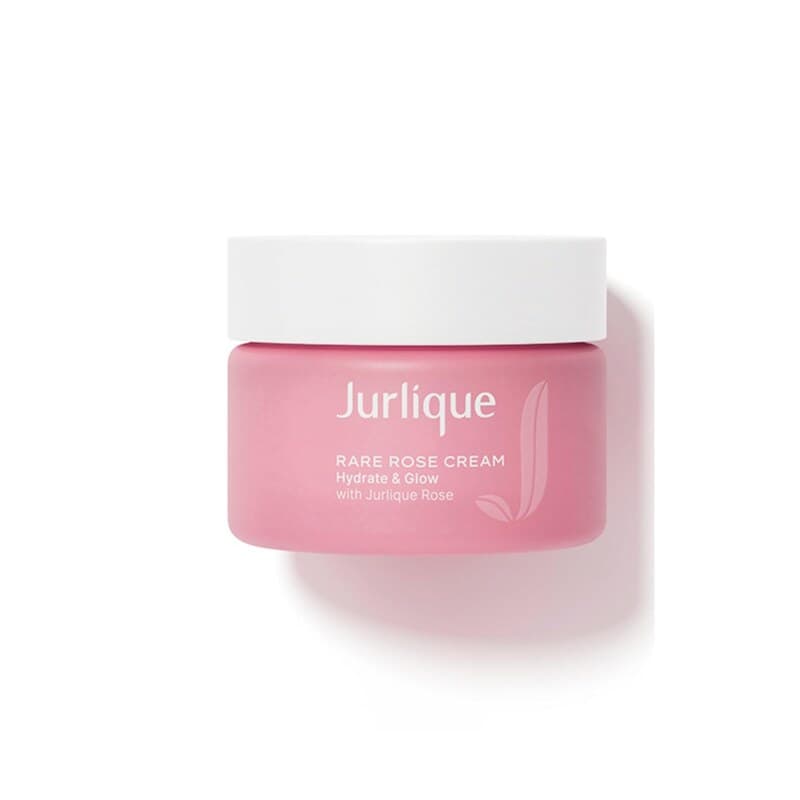
Salt, sun and wind take a toll on skin over a week of surfing. A short evening ritual with good Australian products restores the balance.
Lennox Head and the points to the south
When Byron is crowded, the coast to the south offers some of the best waves in New South Wales. Lennox Head, about twenty minutes’ drive away, has a long, powerful right-hand point. It breaks over boulders below a grassy headland and suits experienced surfers only. On a big winter swell, it is one of the finest waves in Australia.
Closer to town, Suffolk Park and the southern end of Tallow Beach offer quieter beach breaks. Further south, Ballina’s beaches and breakwalls produce good waves in the right conditions. A local guide can read the swell and choose the best option each morning. In other words, a short drive often means an empty line-up.
Lennox Head also has a strong surf community and a small village with good cafes. Many visitors spend a morning there, then return to Byron for lunch. If you are not surfing Lennox, the headland lookout gives a perfect view of the point. Watching the locals ride it on a big day is a spectacle in itself.
When to go for Byron Bay surfing
Byron receives swell all year, but the seasons change its character. Autumn, from March to May, often brings clean groundswells and light winds. Winter, from June to August, adds cool mornings, offshore breezes and some of the best days at The Pass. As a result, many local surfers consider these months the prime season.
Summer is warm and lively, with occasional cyclone swells from the north. However, the town is also at its busiest from Christmas to late January. Spring brings sunny weather and frequent northeast winds in the afternoon. In every season, plan to surf early, when the wind is lightest.
Swell direction matters as well. Southerly and southeasterly swells wrap into the bay and light up The Pass. In contrast, easterly and northeasterly swells favor the open beaches south of the cape. Therefore, a good forecast and a flexible plan will bring you the best waves of the week.
| Break | Wave | Best for | Notes |
|---|---|---|---|
| The Pass | Long right-hander | Longboards | Busy, best at dawn |
| Wategos | Small, gentle waves | Beginners and longboards | Sheltered from southerlies |
| Little Wategos | Rocky corner | Experienced surfers | Below the easterly point |
| Clarkes Beach | Shifting sandbanks | Intermediate surfers | Close to town |
| Main Beach | Beach break | Beginners | Patrolled in season |
| Belongil | Beach break | Intermediate surfers | Fewer crowds |
| Tallow Beach | Open beach break | Shortboards | Catches the most swell |
| Broken Head | Right-hand point | Intermediate to advanced | Inside a nature reserve |
Water temperatures stay mild compared with southern Australia. Many surfers wear boardshorts or a light top from November to April. In winter, a three-millimeter spring suit or a light full suit keeps you comfortable at dawn.
You may also like

Byron surf culture and its creative scene
Byron Bay surfing has always attracted creative people. In the 1960s and 1970s, surfers, musicians and artists settled in the town and the hills behind it. They built a culture around the ocean, the land and a slower way of living. That spirit still drives Byron’s galleries, studios and small businesses today.
The town’s design scene grew directly from that culture. Local labels make swimwear, linen, ceramics and furniture inspired by the beach. Boutique hotels and restaurants commission local artists and makers. As a result, Byron has become one of Australia’s most influential small towns for style.
Surfboard shaping remains part of the scene. Several respected shapers work in Byron and the surrounding towns, crafting longboards and modern designs by hand. Ordering a custom board here makes a meaningful souvenir. Most shapers can ship the finished board to you anywhere in the world.
Music and festivals add another layer. The region hosts major music and writers’ events through the year, along with weekly markets. The Byron Bay Community Market and the Bangalow Market showcase local makers and growers. Visit one on a weekend morning after an early surf.
Booking a private surf coach in Byron
A private coach is the best way to experience Byron Bay surfing. They choose the right break for the tide, wind and your level. More importantly, they help you navigate busy line-ups with confidence. Many coaches here specialize in longboarding, while others focus on performance surfing.
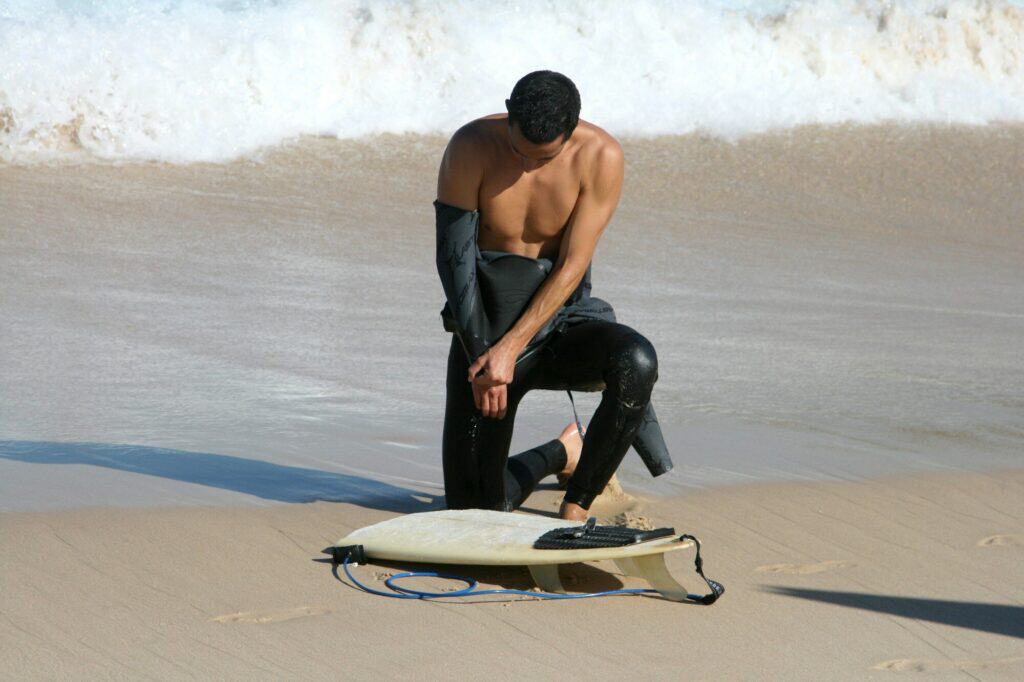
Look for a coach accredited by Surfing Australia, the national body for the sport. Sessions usually run for about two hours, and many include boards and wetsuits. Your hotel can arrange a coach, often with pickup at dawn. For advanced surfers, ask about video analysis or a guided trip to the quieter points south of town.
Beginners usually start at Wategos or the gentle end of Clarkes Beach. The waves there are soft, and the sand is forgiving. After a few sessions, the coach may move you toward The Pass on a smaller day. Few experiences match riding your first long wave beneath the lighthouse.
Families are well catered for too. Many schools run group lessons for children in the gentle waves at Wategos and Main Beach. Meanwhile, parents can book a private session on a nearby break. Everyone meets afterward for lunch on the sand.
Where to stay for surf and design
Raes on Watego’s is the most romantic address in Byron Bay. It sits just above the sand at Wategos, with a handful of suites in a Mediterranean-style villa. Its dining room looks straight over the water. Book well ahead, because it fills quickly in every season.

Crystalbrook Byron offers a different mood. Its villas sit among rainforest and wetlands a short drive from town. The resort has a large pool, a spa and a restaurant built around local produce. It suits travelers who want space, privacy and easy access to the beaches.
For design lovers, The Bower Byron Bay delivers a beach-house feel near Clarkes Beach. Further north, Halcyon House at Cabarita Beach has become a destination in its own right. Its rooms are filled with vintage pieces, and its restaurant, Paper Daisy, is widely praised. Many surfers base themselves there and drive to Byron for the waves.
Private villas offer another option. Many hinterland homes come with pools, valley views and full privacy. They suit families or groups who want space and a quieter base. From most of them, the beaches are only a fifteen to twenty minute drive away.
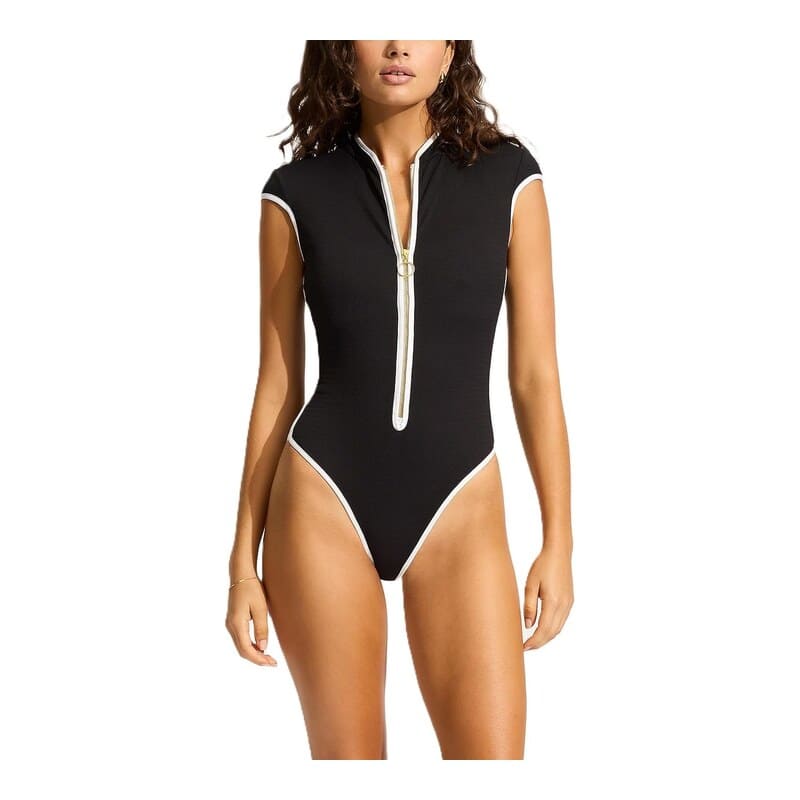
A cap-sleeve suit from the Australian swim label, made for paddling.
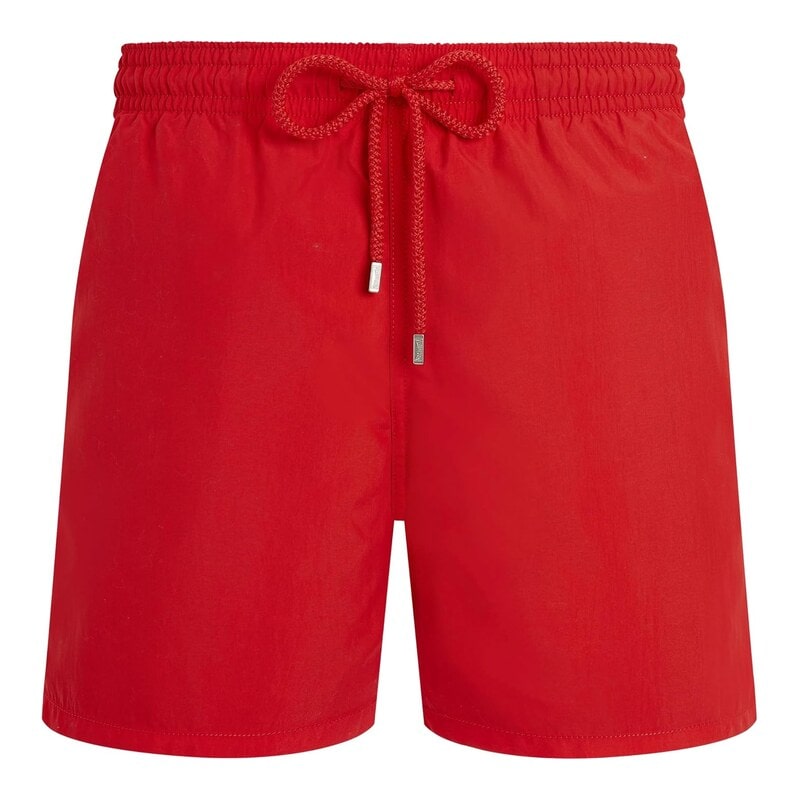
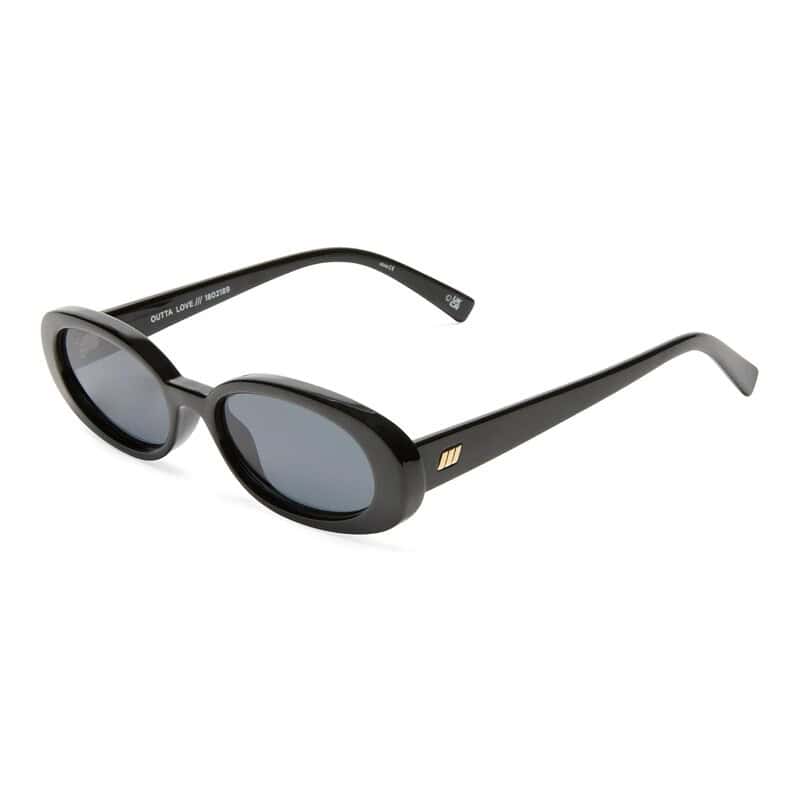
The Byron table
Byron’s food scene matches its surf. Local farms grow macadamias, avocados, coffee and tropical fruit, and fishermen land fresh seafood daily. Chefs build menus around that produce with real skill. As a result, a week here can feel like a culinary journey.
Start close to the water. Beach Byron Bay sits right on the sand at Clarkes, perfect for a long lunch after a surf. Raes Dining Room offers refined seafood with views across Wategos. Meanwhile, Fishheads on Main Beach serves simpler fare with the same sea breeze.

Then head inland for the region’s most celebrated meals. Pipit in Pottsville cooks over fire with ingredients from nearby farms and waters. Harvest in Newrybar serves seasonal dishes in a restored village setting. The Farm Byron Bay, just outside town, combines a working farm, a bakery and the Three Blue Ducks restaurant.
Byron also has a lively drinks culture. Stone & Wood began brewing here, and its pale ale became famous across Australia. Small distilleries in the hinterland produce gin from native botanicals. For coffee, follow the locals to the Arts and Industry Estate, where roasters share space with designers and makers.
Booking ahead is essential for the best tables. In fact, Pipit and Raes can be full weeks in advance during peak season. Ask your hotel to secure reservations when you book your stay. Then build your surf sessions around those meals, rather than the other way around.
The hinterland, a world away from the beach
Behind Byron Bay, green hills roll toward the ranges. This is the hinterland, a region of villages, rainforest and small farms. It offers a perfect rest day between surf sessions. Many visitors say it is the part of Byron they remember most.
Bangalow is the classic first stop, with heritage shopfronts and excellent cafes. Federal and Newrybar are smaller and quieter, each with a restaurant worth the drive. Further west, Minyon Falls drops into a rainforest gorge inside Nightcap National Park. In the late afternoon, the light across the valleys is unforgettable.
Wellness retreats also gather in these hills. Gaia Retreat and Spa offers treatments, yoga and organic food in complete seclusion. Many guests pair two days there with several days of surfing. It is a restorative way to balance an active trip.
In addition, many hinterland farms welcome visitors for tours and tastings. Some grow macadamias or coffee, while others produce cheese, honey or olive oil. Similarly, small wineries and distilleries open their doors on weekends. A slow drive between them fills a rest day beautifully.
Cape Byron and its lighthouse
No visit is complete without a walk to Cape Byron. A loop track climbs from The Pass through coastal forest to the lighthouse and the easterly point. Along the way, lookouts frame the surf breaks far below. At dawn, the walk becomes a pilgrimage for early risers.

The lighthouse has watched over the coast for more than a century. According to NSW National Parks, it was first lit in 1901. It stands on the most easterly point of the Australian mainland. Turtles, dolphins and humpback whales are regularly seen from the headland.
Whale season runs from about June to November. During those months, humpbacks pass close to the cape on their migration. Watching them breach while surfers ride the waves below is a uniquely Byron moment. Bring binoculars and a little patience.
The walk itself is easy and well marked. Even so, set out early in summer, because the sun on the exposed sections is strong. Afterward, reward yourself with a swim at Wategos and coffee nearby. Few mornings anywhere begin so well.
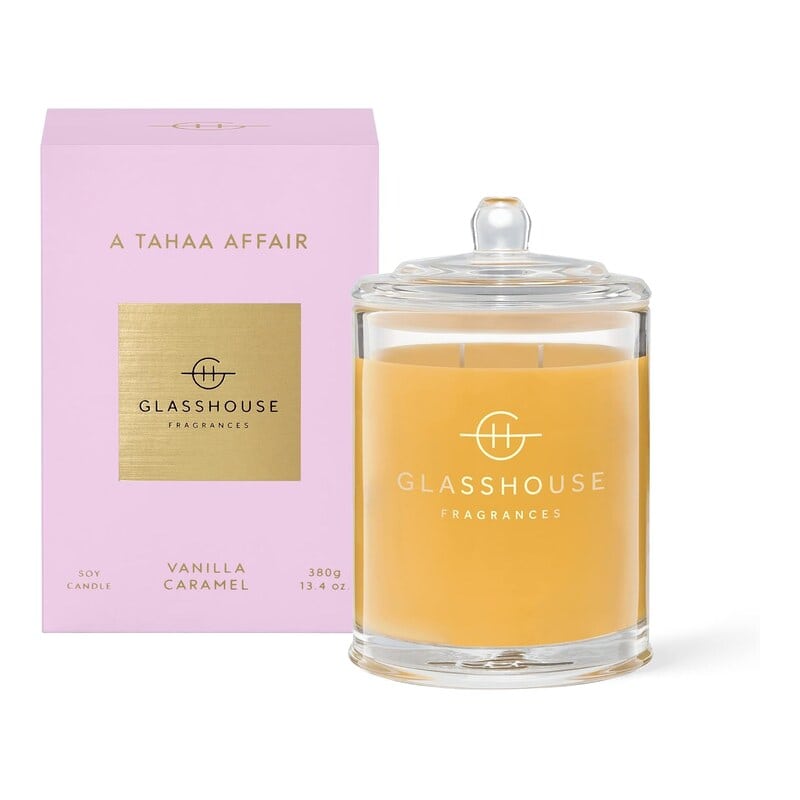
A triple-scented soy candle from the Australian fragrance house.
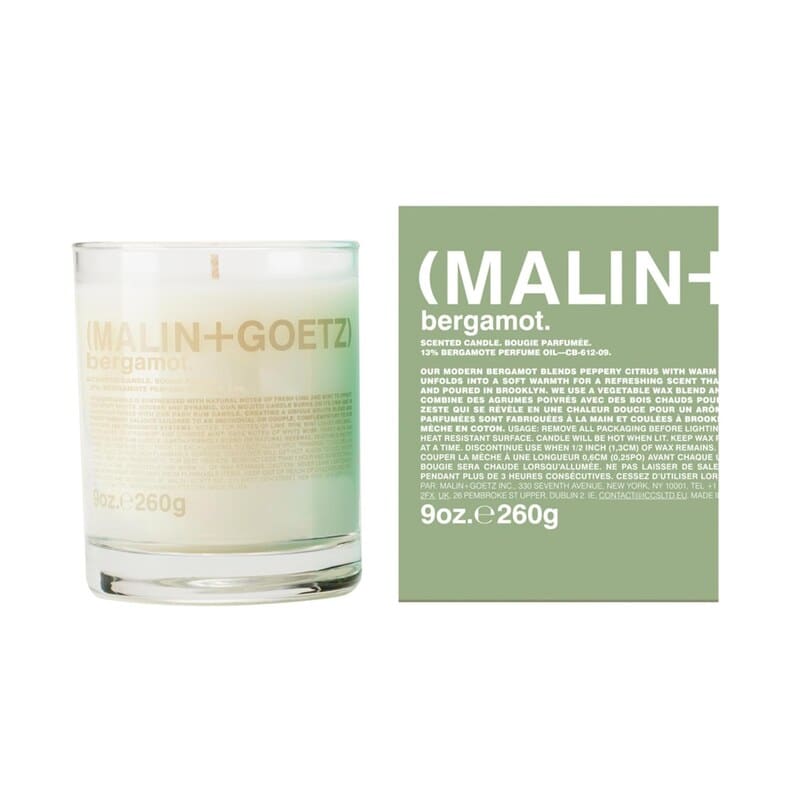
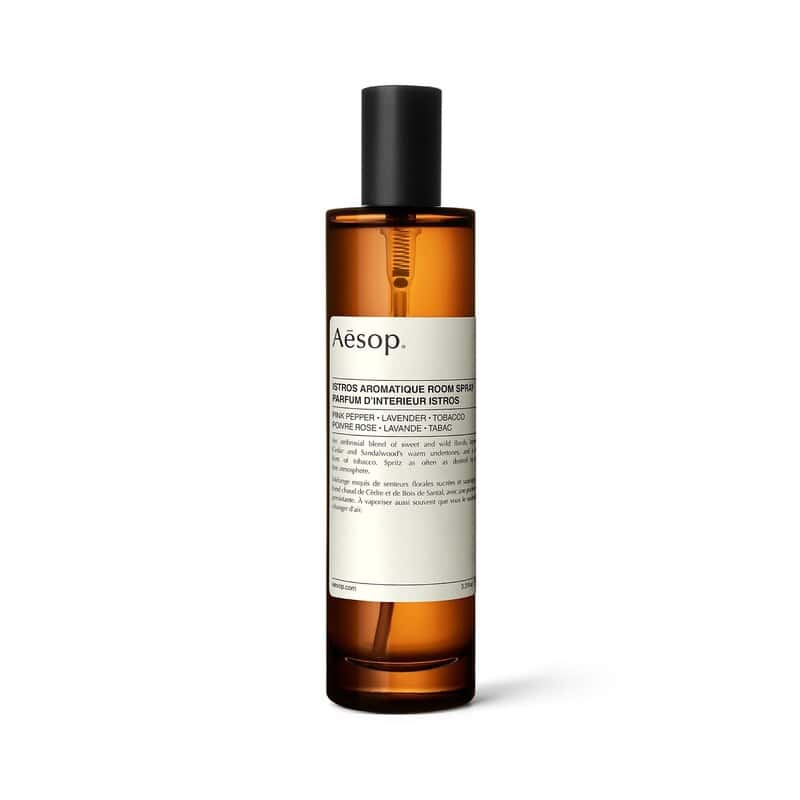
Byron’s boutique hotels are known for their scent as much as their style. These three fragrances bring a little of that mood home.
You may also like


Arakwal Country and the marine park
Byron Bay is Bundjalung Country, and its Traditional Custodians are the Arakwal people. Their connection to this coast reaches back many thousands of years. Today, they help manage some of its most precious places. That partnership is part of what makes Byron special.
Arakwal National Park, which runs behind Tallow Beach, shows that partnership clearly. According to NSW National Parks, the park is jointly managed. The partners are the Bundjalung of Byron Bay People and the NSW National Parks and Wildlife Service. Tallow Beach sits about 2 miles, or 3.2 kilometers, from the heart of town. It is a fine place for swimming, birdwatching and whale watching.

Offshore, Julian Rocks lies inside the Cape Byron Marine Park. Leopard sharks gather there in summer, and grey nurse sharks visit in winter. Turtles, rays and schools of fish fill the water year round. A guided snorkel or dive makes an ideal rest day between surf sessions.
Visitors can help protect this coast. Use reef-safe sunscreen, take all rubbish home and follow the rules of the marine park. Join a local beach clean if you have a spare morning. In Byron, caring for the ocean is part of everyday life.
Local surf clubs and community groups lead much of this work. For example, volunteers regularly clean beaches and replant dunes along the coast. Visitors are welcome to join, and the experience offers a different view of the town. It also connects you with the people who know these waters best.
A perfect Byron surf day
Begin before sunrise with a walk to the easterly point. Then paddle out at The Pass or Wategos as the light spreads across the water. Surf for two hours, while the wind is still light. Afterward, breakfast at a cafe near Clarkes Beach tastes better than anywhere else.
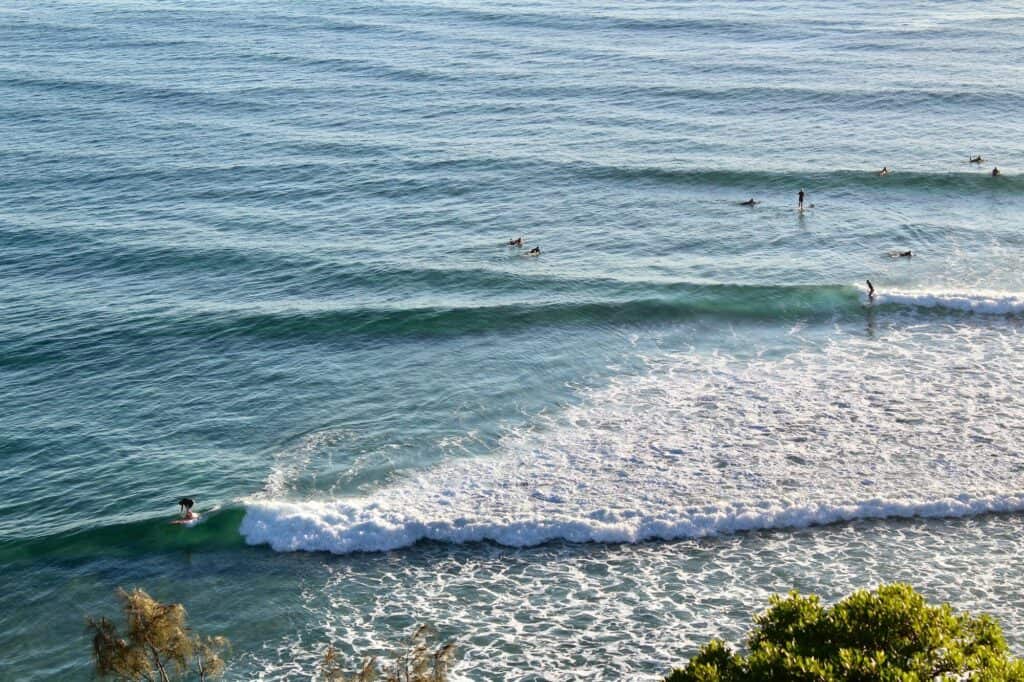
By late morning, drive into the hinterland for lunch in Bangalow or Newrybar. Spend the afternoon at a spa, a gallery or simply by the pool. Then return to the coast for a sunset surf or a swim. Finally, end the day with dinner at Raes or Pipit.
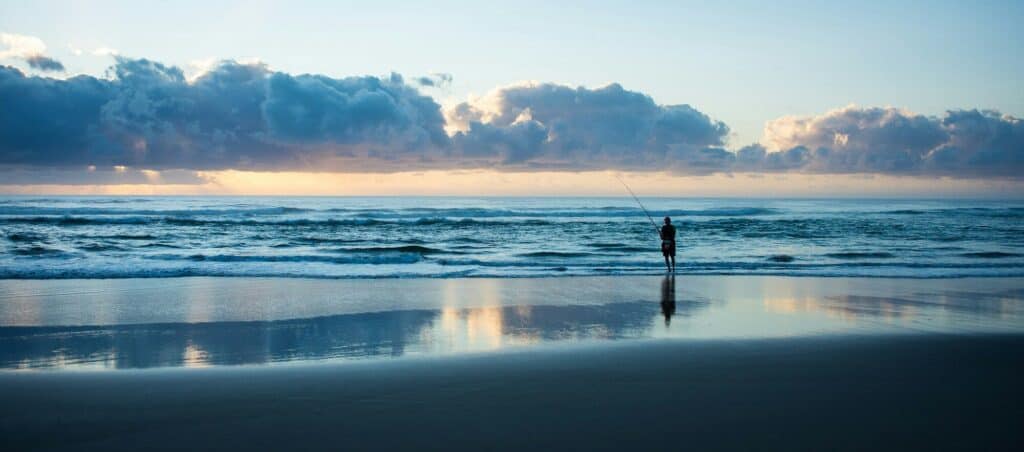
That rhythm explains why Byron Bay surfing feels so complete. The waves are only part of the story. The food, the design and the landscape fill in the rest. Together, they create a trip that restores body and mind.
Of course, not every day needs to follow the same plan. On big swell days, you might spend the whole morning watching the experts at Lennox Head. On flat days, the marine park and the hinterland take over. Either way, Byron rewards a flexible spirit.
Surf etiquette and safety in Byron
Byron’s popularity makes etiquette essential. The surfer closest to the peak has priority, so never drop in. Paddle wide around the line-up and keep control of your board. Above all, be patient at The Pass, where waves are shared among many surfers.
Safety matters too. Swim and surf near patrolled beaches, and always swim between the red and yellow flags. Shark sightings occur along this coast, as on many Australian beaches. Check the SharkSmart app before you paddle out. Avoid surfing at dusk or near river mouths after heavy rain.
Planning your Byron Bay surf trip
Byron Bay is about a two-hour drive south of Brisbane or a short drive from Ballina Byron Gateway Airport. Gold Coast Airport, slightly further north, has more international connections. Most visitors stay five to seven nights. That allows time for several surf sessions, a hinterland day and a visit to Julian Rocks.
Byron Bay surfing also works well as part of a wider Australian journey. Many travelers fly from Sydney or Melbourne for a week, then continue north to Queensland. Others combine Byron with a stay in the Whitsundays or the Great Barrier Reef. Either way, plan at least one free day to chase the best swell.
For a longer journey, pair Byron with surfing Noosa to the north. Together they form the finest surf trip on the east coast. To see how Byron fits into the wider story, read our guide to Australian surf culture.

Wholefood recipes from the chefs behind Three Blue Ducks.
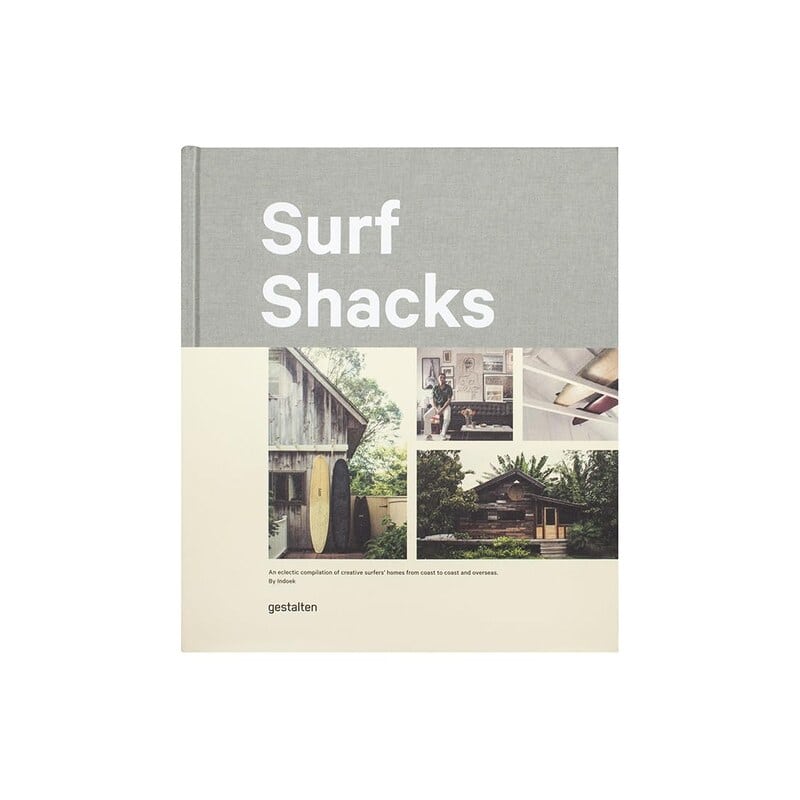
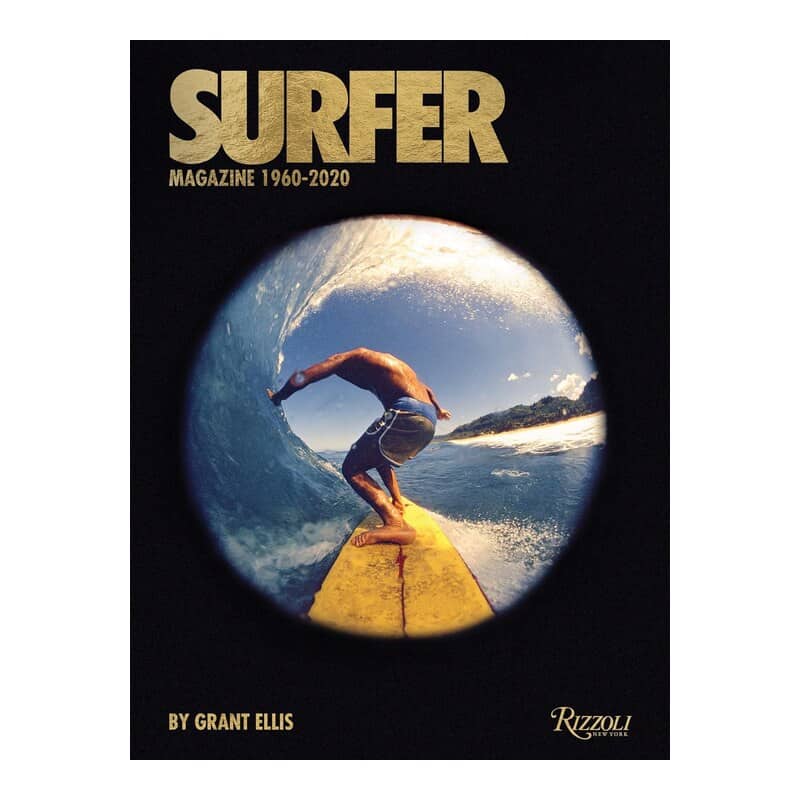
Finally, take a little of Byron home on the bookshelf. These three books capture its food, its houses and its surf.
Take our short quiz and find the city, coast and pace of life that suits you best.
Take the quizQuestions worth asking
When is the best time for Byron Bay surfing?
Autumn and winter, roughly March to August, usually bring the most consistent waves and the lightest winds. Summer is warm but busy, with occasional cyclone swells.
Is Byron Bay good for beginners?
Yes. Wategos and the gentle end of Clarkes Beach have soft waves, and accredited coaches work there daily. Avoid the main peak at The Pass until you are confident.
How safe is surfing in Byron Bay?
Byron is a popular, well-patrolled surf town. Swim between the flags, surf with others, avoid dawn and dusk near river mouths and check the SharkSmart app for recent sightings.
Do I need a wetsuit in Byron Bay?
In summer, boardshorts or a light top are usually enough. From June to September, a spring suit or light full suit is more comfortable for early sessions.
Where should I stay for surfing in Byron Bay?
Raes on Watego’s puts you steps from the water at Wategos. Crystalbrook Byron and The Bower suit travelers who want design, space or easy access to the town beaches.
What else is there to do in Byron Bay?
Walk to Cape Byron Lighthouse, snorkel at Julian Rocks, visit hinterland villages like Bangalow and book a long lunch at Pipit or Harvest.